Scrum Teams spend a lot of time in a room together. In a two-week Sprint, they’ll spend upwards of 10 hours in Ceremonies. Ostensibly, this is a good use of time, but is that time evenly allocated to planning and self-improvement? I’d argue it is not.
A Scrum Team following industry best practices spends upwards of 60% of their time together figuring out what to do next. (Included here are both Planning and Stand-ups – both ceremonies dedicated to ensuring What’s next? is answered.) If we include Demos as de-facto Planning session (you are gathering feedback about what to iterate on next, aren’t you?), that number jumps to ~80%. This leaves just 20% – 90 minutes – every two weeks to reflect and share on learnings for the entire team. If you’re following the rules, that could upwards of 7 people! How much can you share, reflect, and digest feedback in 13 minutes? And that’s assuming you start on time with everyone staying engaged throughout!
I posit that a compressed, singular ceremony in which you need be present, open, and responsive to feedback is untenable. Few teams use their time well to retrospect, and it shows: Retrospectives are usually the first Ceremony to be cancelled when the team “needs” the time back at the end of the Sprint. It seems there’s always time to build, but not so much time to learn and reflect.
So, what if we flipped the script? What if we spent less time planning what happens next, and more time reflecting on how our learnings can be applied to that next step, whatever it may be? There will always be something else to work on – why not spend more time applying lessons learned to future work?
A pie chart of time allocated toward Sprint Ceremonies would shift a bit:
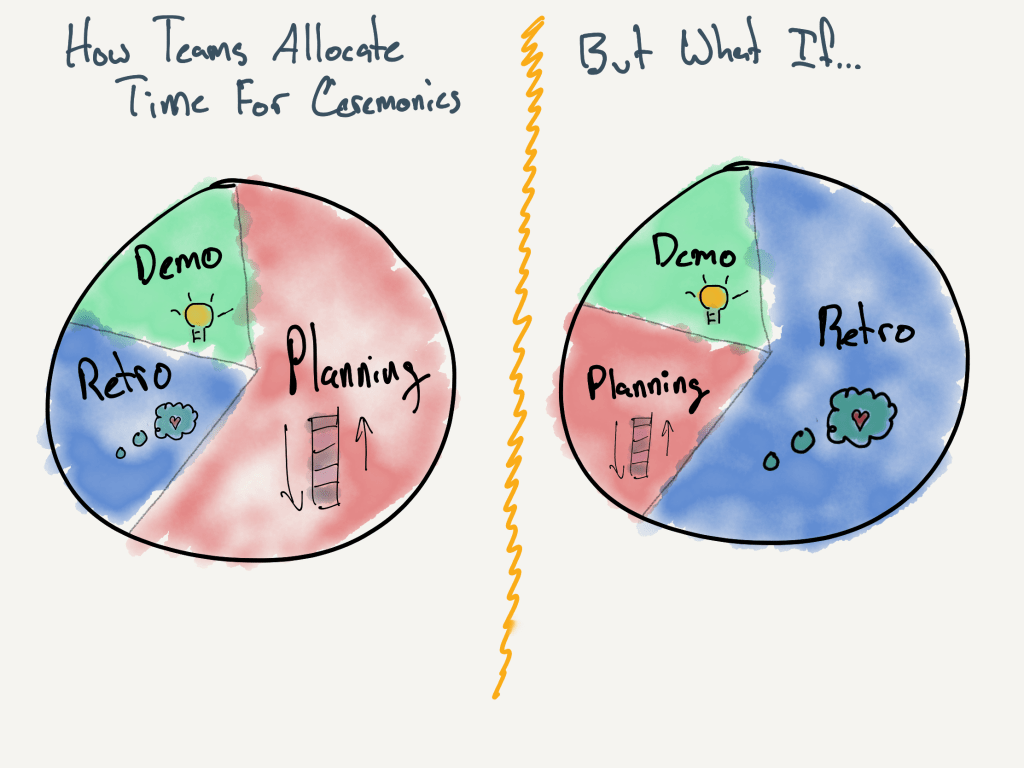
To be clear, Stand-ups and Planning would still occur – we’d just spend less time talking about What’s next?
Instead of “What did you do yesterday?” maybe we’d ask “What did you learn yesterday?”
Instead of “What will you be doing today?” we may ask, “How will you take what you’ve learned and apply them to your work?”
Blockers could (should!) still be surfaced, but what more did we learn about that particular problem? Do we have any more data or insight to work with so we can accelerate our effort to unblock it?
Ultimately, this falls to the Scrum Master to facilitate and enable, but here’s my pitch… Do this, and you’ll see two things happen over the course of a few Sprints:
- A more thoughtful, mindful team, very self-aware and very transparent with each other.
- Less time spent racing blindly toward the finish, and more time critically considering the best path forward.
Who knows what this will do to your teams’ velocity, but, like, does that really even matter? Probably not as much as you think.
 Goscin.ski